RESEARCH DIRECTION 03
Mechanotransduction and disease
We investigate how altered mechanotransduction contributes to disease-relevant cellular and tissue behaviors. Mutations in or misexpression of cytoskeletal and adhesion proteins is linked to a number of pathologies including birth defects, hearing loss, cancer, and cardiovascular diseases. In addition to studying the mechanisms that drive normal tissue development and homeostasis, we can leverage powerful genetic tools in fly and human iPSC models to study how mutation or misexpression of proteins involved in generating or responding to force can rewire mechanochemical circuits to drive aberrant cell behaviors.
Research snapshots
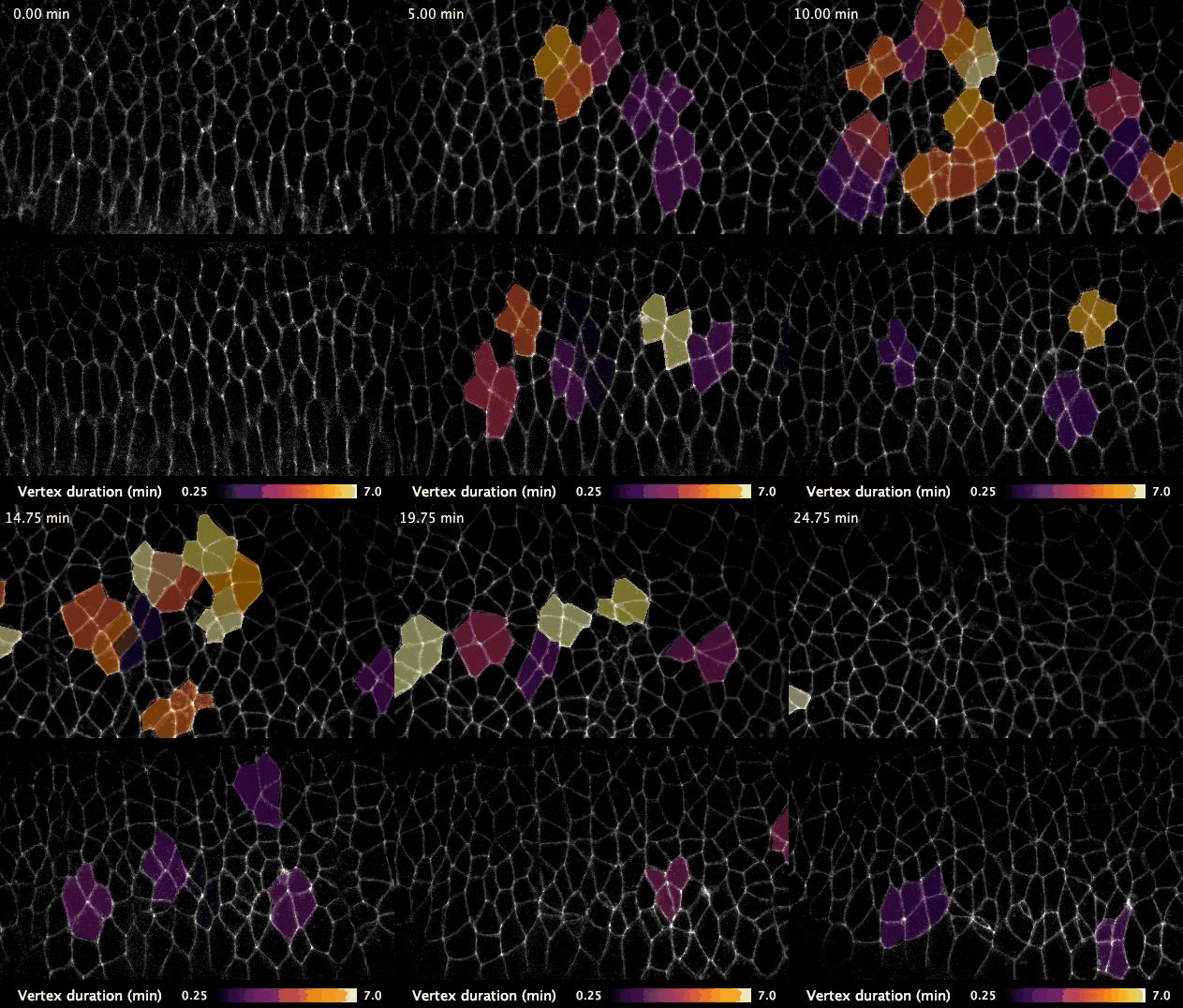
A gain-of-function Fimbrin variant altered at a gene region that is found mutated in patients with congenital developmental defects when expressed in fly embryos arrests tissue morphogenesis.
Taneja et al., 2026. Developmental Cell

Laser ablation and modeling approaches reveal inhibition of Focal Adhesion Kinase signaling alters the viscoelastic properties of cardiac myofibrils, a phenomenon also observed in failing hearts.
Taneja et al., 2020. Cytoskeleton

Treatment of iPSC-derived cardiomyocytes with anti-cancer inhibitors targeting MCL-1 causes myofibril and mitochondrial network disorganization, providing a cellular mechanism for the cardiotoxic effects of these chemotherapeutic agents .
Rasmussen, Taneja, et al., 2020. iScience